 WagWatch
Questions to ask at your puppy's first vet visit
At your puppy’s first vet visit, ask about the vaccination schedule, parasite prevention, food and growth, behavior basics and the cost of the first year, and write down every answer: together they are your puppy’s baseline. This page gives you those questions in the order you will need them, before the appointment, during the exam and before checkout, with a checklist you can print.
Key takeaways
- Bring the breeder’s or shelter’s paperwork, your notes on appetite, sleep and behavior, and a stool sample if the clinic asks for one.
- Ask which vaccines are core and which depend on her lifestyle, and record each one’s name and due date.
- Ask what deworming and flea, tick and heartworm prevention she has had, what comes next, and when the dose changes.
- Ask for an itemized first-year estimate, spay or neuter included, before checkout.
- Log every answer in one record the whole household can see.
What should you do before the puppy’s first vet appointment?
The visit goes better when you arrive with facts instead of memory. Gather the paperwork the breeder, shelter or rescue gave you: any vaccine records, deworming dates, and the food the puppy has been eating. When you book, ask whether the clinic wants a stool sample, and how fresh it should be.
What to bring: paperwork, stool sample, and your own notes
Write down what you have seen in the first days at home: appetite, sleep, energy, any loose stool or scratching. Small changes are easy to forget in a busy exam room, and this note becomes the first entry in your puppy’s baseline. If someone else in your household feeds or walks the puppy, have them add what they have seen too, or log it in a shared record like WagWatch, so nothing is guessed at on the drive over.
Questions to ask the clinic when you book
Call ahead and ask which vaccines are due at this visit, whether they send records by email, and what a first visit costs. Ask how you would get her records if you ever switched clinics. If the terms are new to you, Colorado State University’s veterinary hospital explains core and non-core vaccines for owners, which makes the schedule your vet proposes easier to follow and to question.
What should you ask about the puppy vaccination schedule at the first visit?
Core and non-core vaccines: what does this puppy actually need
Ask two things straight out: “Which of these are core?” and “Which are non-core, and what does my puppy’s lifestyle actually call for?” Colorado State lists rabies, distemper, adenovirus, parvovirus and leptospirosis as core for dogs, recommended for all of them, and Bordetella, Lyme and canine influenza as non-core, by lifestyle: boarding, grooming, day care and dog parks, or ticks where you live and travel. Ask which list your vet follows, and why. Write down which shots were given, the product name, and the date each booster is due. That record follows her: the American Veterinary Society of Animal Behavior says each puppy in a socialization class should be up to date on vaccinations, and later a kennel or a new clinic may ask for the dates too.
Who else in the household takes her to the vet, and how do you track the schedule
In a household with several caregivers, the vaccination schedule fails the same way medication schedules fail: one person books the appointment, another takes the puppy, and nobody records what happened. Before you leave the clinic, ask for the full due-date list in writing, then log it somewhere everyone in the house can see and update. And ask the vet now, before it happens: “If a booster runs late, does the series start again or carry on?” Get the answer for your puppy’s own schedule rather than guessing later.
One paragraph worth keeping: the point of writing all this down at visit one is that you will be asked for the vaccine history again and again over your dog’s life, as dates and names, not memories. Capturing them now, in one shared log the whole household uses, means you never rebuild the history from loose PDFs years later. We keep a short list of exactly what to capture in what to write down before a vet appointment.
Which parasite prevention questions matter at a first puppy appointment?
Deworming: what has already been done and what comes next
Ask what dewormer the breeder or shelter used, at what age, and the dose. The Companion Animal Parasite Council’s guidelines, written for vets, start deworming puppies at 2 weeks of age and repeat it every 2 weeks until regular broad-spectrum parasite control begins, so there may already be several doses to account for. Ask what comes next, and log the product name and dates so everyone can see the course was finished.
Flea, tick, and heartworm: when to start and what product
Ask which products suit her current age and weight, and at what weight each dose changes as she grows. Ask whether heartworm is a risk where you live and when she should start prevention; the same CAPC guidelines encourage year-round heartworm prevention and flea and tick control for all pets, and a yearly heartworm test for dogs. Write down the weight at which the next dose size starts, and log start dates so everyone knows the schedule, as for any medication with reminders.
What should you ask the vet about feeding and growth?
Bring the current food bag or a photo of the label and ask three things: is this food right for a puppy of her expected size, how much per meal, and when to switch to adult food. Ask, too, what weight the vet expects to see at each visit until she is grown, since that is the measure you can follow at home.
How do you know the puppy is growing at the right pace?
Ask the vet to show you where your puppy sits on a growth chart and what weight range they expect at the next visit. Write down her weight with the date, and the portion the vet suggested, in a shared log, so whoever feeds dinner knows the exact amount. If two people in the house are each eyeballing portions, a puppy can quietly get fed twice.
What weight and appetite changes are worth calling about?
Ask which changes mean a call the same day, which mean an emergency clinic now, and who to call when the clinic is closed: a skipped meal, a sudden weight drop, vomiting, diarrhea, a restless night after eating. Write the answers down word for word, then log meals and weight so the pattern is visible early.
Also ask which foods are off-limits for her, and write the list down where every caregiver can see it.
Which behavior and training questions are worth the vet’s time at visit one?
Potty training struggles: medical or behavioral?
Ask: “How many accidents should I expect at this age, and when should they worry me?” and “Could frequent accidents have a medical cause you would want to check?” Write down what the vet tells you to expect, so you can spot a change later. If your household shares care duties, log each accident and its time so the pattern is visible to everyone; our puppy potty training log is a printable sheet for exactly that.
Socialization and the first few months
Ask: “What socialization is right for her before her vaccines are finished?” The American Veterinary Society of Animal Behavior calls the first three months of life the most important time for puppy socialization, and says puppies should be socialized before they are fully vaccinated. It says classes can generally start as early as 7 to 8 weeks, with at least one set of vaccines 7 days before the first class and a first deworming, and that owners of a puppy who shows fear should ask their vet for guidance. Ask which behaviors at this age the vet would want to hear about, and note restless nights and skipped meals from the start.
What cost and insurance questions should you ask before checkout?
What will the first year cost, roughly
Ask the front desk for an itemized estimate of the puppy’s first year: remaining vaccine visits, the spay or neuter surgery, and a typical sick visit. Prices vary a lot by clinic and region, so ask what this clinic charges rather than going by an average. If they offer a puppy vaccine package, ask exactly which visits it covers and what happens if a visit is needed sooner. Write the spay or neuter estimate and the package terms in your shared log, so anyone handling the next appointment knows what was already quoted.
Insurance and payment plans: what to ask before you commit
Ask whether the clinic works with pet insurance claims directly and whether it offers payment plans for surgery. If you are thinking about insurance, ask each insurer how it defines a pre-existing condition, whether there is a waiting period after you enroll, and what that means for anything found at this visit. Note the date you enroll in your log so no one has to guess it later.
What should you ask if you also brought a kitten (first kitten visit differences)?
Kitten-specific questions the puppy list misses
Swap the puppy vaccine questions for the kitten series. Colorado State lists rabies and FVRCP as core for cats and recommends the feline leukemia vaccine for every kitten under one year; Cornell’s Feline Health Center calls it a core vaccine for kittens. Ask whether she needs an FIV and FeLV test before she meets your other cats: Cornell says every cat should be tested for FeLV before joining a home, and any cat never tested for FIV should be. Ask which dewormer and flea product suit her age and weight.
Add the litter box questions the puppy list skips: what her stool and urination should look like, and what straining or missed trips would mean. Cornell calls straining with little or no urine “a true medical emergency”: call your vet or an emergency clinic now. Log the test results, vaccine dates and the dewormer’s name and dose right away, so a second caregiver can confirm the next dose happened.
Which answers are worth writing down for the next visit?
The visit only pays off if the answers survive past the parking lot. Write down the dates, doses and weights in a log every caregiver can see, so the next visit starts from history instead of memory.
The baseline record: what to log on day one
| What to record | Example entry | Why it matters later |
|---|---|---|
| Weight | 9.2 lbs, with today’s date | Growth, and doses that go by weight |
| Vaccine given and due date | DHPP #1 today; the date the vet gave for the next | Proof a course was finished |
| Parasite product and dose | Flea and tick product, monthly, started today | “Was this month’s dose given?” |
| Food and amount | The food and portion the vet agreed, as they said it | Questions about a diet change |
| Behavior notes | Playful, slept through the night | The pattern of small changes |
That last row matters more than it looks: AVSAB’s socialization window is the first three months, so early behavior notes show what she met, and how she took it, while it is open.
Sharing the record with sitters, partners, and your vet
A paper notebook dies in one kitchen drawer, and a photo of a discharge sheet buries itself in your camera roll. Use a shared log your partner, sitter or dog walker can update in seconds, so “how has she been?” gets answered with dates, not guesses, and bring that history to the vet instead of loose sheets from different clinics. In WagWatch, free on every plan:
- Vaccines go on her profile with the date given and the date the next is due; Home’s Reminders card lists any due in the next 30 days.
- Dewormer and flea, tick and heartworm products are medications with a dose, a schedule and push reminders on the phone apps.
- Meals take All, Some or None, and everyone in your household logs into the same record.
- At the next visit: the Vet report PDF, free for the last 60 days, or a share link Premium your vet opens without an account.
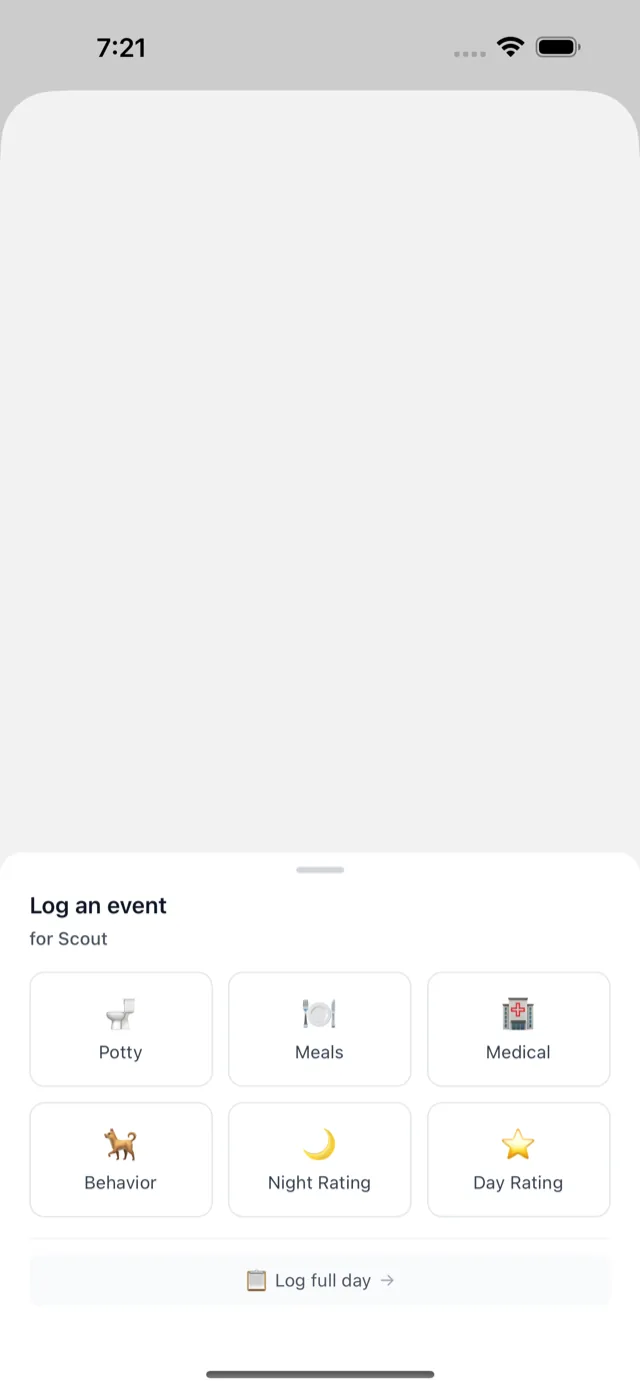
Screen shown is from the iPhone app, with our sample dog, before version 1.4.0 added an eighth tile, Weight. The Android app and the web app have the same tiles.
If your household already keeps a shared log for an older pet, add the puppy the same day as this visit.
What does a complete first-visit question checklist look like?
Here it is on one page. Print it, take it with you, and write the answers in the space beside each question.
Puppy’s first vet visit: questions to ask
| Before the visit | |
|---|---|
| Which vaccines does my puppy need, and on what dates? | |
| Which parasite prevention covers where we live, and when does each dose start? | |
| What food, and what portion, for her age and expected size? | |
| Should I bring a stool sample, or any paperwork from the breeder? | |
| During the exam | |
| What does she weigh, and what weight do you expect at the next visit? | |
| Anything about her teeth, ears or coat we should watch? | |
| Which signs at home mean a call the same day, and which an emergency clinic now? | |
| When is the next appointment due? | |
| Before checkout | |
| What does this visit cost, and what will the full vaccine course total? | |
| Which plans or packages do you offer, and what do they actually cover? | |
| Can I get a printed or emailed summary today, with every due date? | |
Write every answer into a shared log your whole household can see, so the puppy’s baseline starts at visit one and changes show up early.
Questions
What questions should I ask at my puppy’s first vet visit?
Ask which vaccines are due now, which your vet counts as core and which depend on her lifestyle, what deworming has already been done, and which flea, tick and heartworm products suit her age and weight. Ask how much to feed, when to switch to adult food, and which changes mean a call the same day. Get every due date and dose in writing before you leave.
How much does a puppy’s first vet visit cost?
Prices vary widely by clinic and region, so ask the front desk what this clinic charges rather than relying on an average. Ask for an itemized first-year estimate covering the remaining vaccine visits, the spay or neuter surgery and a typical sick visit. If a vaccine package is offered, ask exactly which visits it covers and what happens if one is needed sooner.
What vaccines does a puppy need at the first visit?
That is your vet’s schedule, so ask which are core and which go by lifestyle. Colorado State University’s veterinary hospital lists rabies, distemper, adenovirus, parvovirus and leptospirosis as core for dogs, and Bordetella, Lyme and canine influenza as lifestyle vaccines. Record each vaccine’s name, the date given and the date the next is due.
Should I bring a stool sample to my puppy’s first vet appointment?
Ask the clinic when you book, and if they want one, how fresh it should be. Either way, bring the breeder’s or shelter’s paperwork, vaccine records and deworming dates included, a photo of the food label, and your notes on appetite, sleep, energy and any loose stool or scratching.
What’s the difference between a puppy’s and kitten’s first vet visit?
For a kitten, ask about the kitten vaccine series, including feline leukemia, which Cornell calls a core vaccine for kittens, and whether she needs an FIV and FeLV test before she meets your other cats. Ask which dewormer and flea product suit her age and weight, and add the litter box questions: what her stool and urination should look like, and what straining would mean.
Sources
Every general statement about vaccines, parasites, socialization and cats on this page comes from one of these veterinary sources. WagWatch is not connected to any of them.
- Core and non-core vaccines for dogs and cats, CSU Veterinary Health System, Colorado State University
- General Guidelines, Companion Animal Parasite Council
- Position Statement on Puppy Socialization, American Veterinary Society of Animal Behavior
- Feline Leukemia Virus, Cornell Feline Health Center, Cornell University College of Veterinary Medicine
- Feline Immunodeficiency Virus, Cornell Feline Health Center
- Feline Lower Urinary Tract Disease, Cornell Feline Health Center
Not a substitute for your vet
WagWatch is a tracking and logging tool, not a veterinary service. Its job is to help you bring a clear, accurate history to the people who care for your pet professionally.
Log it in WagWatch
Print the checklist for the visit, or add your puppy in WagWatch and put today’s vaccines on her profile before you leave the parking lot, with the next due date.


Free to use every day, the whole log included. Premium adds the full history, photos on entries, vet share links, every pet and the AI assistant — $3.99 a month or $24.99 a year, with a 14-day free trial for new subscribers in the iPhone and Android apps. The dog page has more on what to log for a dog, shared households explains logging together, and the help pages cover logging, reminders and sharing with your vet. More posts are on the blog.